Sabah’s culture isn’t something you only find in a museum. Travel a little further and you’ll find it in longhouses, village kitchens, markets, beadwork, music and stories that are still very much alive.
Sabah is home to more than 30 indigenous groups, each with its own traditions, languages, food and way of life.
You could spend weeks exploring them all. But if you’re wondering where to begin, here are three cultural journeys worth making.
1. Go North for Rungus Culture
Where: Kudat & Matunggong
The drive north towards Kudat is usually associated with beaches and the Tip of Borneo. But slow down along the way and you’ll enter an area where Rungus culture remains an important part of everyday life.
The Rungus are particularly known for their longhouses, beadwork and traditional crafts. Historically, several families would live together under one long roof, sharing a communal space while maintaining their own family areas.
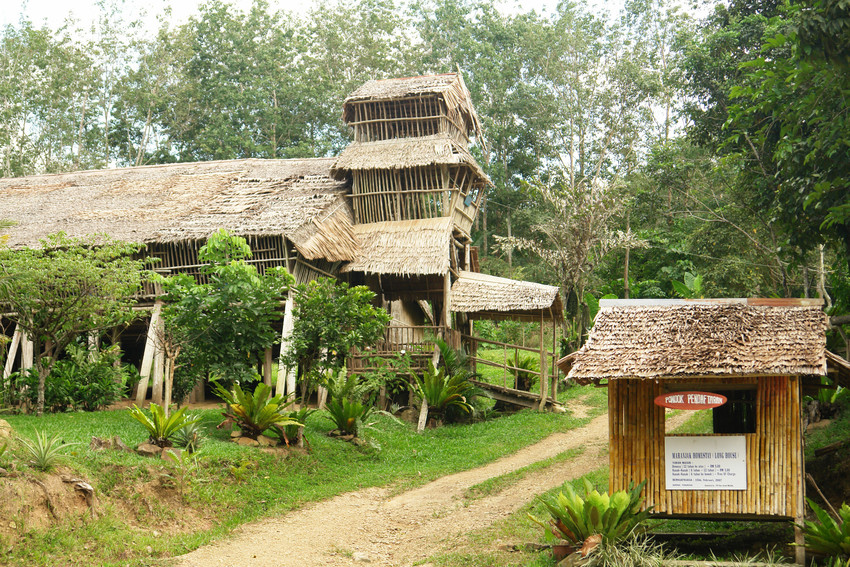
One place to experience this is Kampung Bavanggazo, about 40 kilometres south of Kudat. Its traditional longhouse is built using local materials such as bamboo and rumbia leaves, and visitors can experience Rungus food, dance, beadwork and basket-making. Sabah Tourism recommends staying a night or two if you want a deeper experience, with prior arrangements required.
But don’t rush through just to get a photograph of the longhouse.
Look at the beadwork. Ask how long it takes to make. Sit down for a meal if the opportunity comes. Listen to why the longhouse was designed the way it was.
BAH suggests: Make the Rungus experience part of your journey to Kudat rather than treating it as a quick attraction. Stay overnight if you can, buy crafts directly from their makers and leave some of your tourism money in the village.
2. Meet the Bajau Beyond the Postcards
Where: Kota Belud
You’ve probably seen the photographs: Bajau horsemen in colourful traditional clothing, riding beautifully decorated horses.
There’s a reason the Bajau of Sabah’s west coast are sometimes called the “Cowboys of the East.” Horsemanship has long been associated with the Bajau communities around Kota Belud. Elsewhere in Sabah, particularly along the east coast, Bajau communities have very different traditions shaped by the sea.
That diversity is exactly why Bajau culture shouldn’t be reduced to one photograph.
For travellers, Kota Belud is a good place to start. Visit the local tamu and you’ll see a side of Sabah that feels much more everyday than staged: farmers selling produce, food vendors, handmade goods and people from surrounding communities coming into town.
If your visit happens to coincide with a cultural celebration or equestrian event, even better.
But you don’t necessarily need a festival.
Walk around. Eat something unfamiliar. Talk to the sellers. Ask about the handmade products instead of automatically reaching for the cheapest souvenir.
Sometimes a Sunday morning at a tamu tells you more about a place than an hour inside an attraction.
BAH suggests: Combine Kota Belud with a village or craft experience instead of making it only a lunch stop on the way to somewhere else.
3. Head Into the Interior for Murut Heritage
Where: Tenom
For something quite different, travel into Sabah’s interior.
Tenom is coffee country, but it is also an important place to learn about Murut heritage.
Traditionally, Murut communities lived in communal longhouses, often near rivers. Their cultural heritage includes intricate beadwork, blowpipes, traditional music and the famous Magunatip bamboo dance.
A good introduction is the Sabah Murut Cultural Centre, about 13 kilometres from Tenom town. The large timber complex draws from traditional Murut architecture and houses exhibitions on Murut clothing, old tajau jars, weapons, tools and crafts. Visitors can also encounter traditional activities such as lansaran and blowpipe demonstrations.
While you’re in Tenom, go a little deeper into its history too.
The Antanom Museum tells the story of Antanom, or Ontoros, the Murut leader remembered for resisting British colonial rule in the early 1900s.
Suddenly Tenom becomes more than somewhere to drink coffee.
It becomes a way of understanding Sabah’s interior—its people, its resistance, its traditions and how communities here once lived.
BAH suggests: Give Tenom at least a night. Visit the cultural centre, learn a little about Antanom, find good Tenom coffee and, where possible, spend time with local communities rather than seeing everything through an attraction window.
Don’t Just See Sabah. Get to Know It.
It’s easy to travel Sabah by ticking off the big names.
Kinabalu. Island. Orangutan. Seafood. Sunset.
They’re wonderful, of course.
But somewhere between those places are communities whose stories are just as much a part of Sabah as its mountains and rainforests.
Go north and sit inside a Rungus longhouse.
Spend a morning wandering around Kota Belud.
Head inland and discover why Murut history matters.
And when someone starts telling you a story, don’t be in such a hurry to move on to the next stop.
Stay awhile. Ask questions. Listen.
That’s usually when travelling gets interesting.