Forget looking for a big arts district. Sabah’s creativity is scattered across galleries, old buildings, village homes, workshops and the hands of people who may never call themselves artists.
Ask someone what to do in Sabah and art probably won’t be the first thing they mention.
Mountains? Definitely.
Diving? Of course.
Wildlife, islands, seafood, sunsets? Absolutely.
Art?
There might be a pause.
But perhaps we’ve been looking in the wrong places.
Because Sabah does have an art scene. It just doesn’t always arrive with a gallery sign outside.
Sometimes it’s hanging inside the Sabah Art Gallery in Kota Kinabalu. Sometimes it’s painted across an unexpected wall in town.
But sometimes it’s a woman sitting at home painstakingly joining colourful threads into a piece of linangkit.
It’s a basket being woven in a village.
A woodcarver turning a block of timber into something recognisably Bornean.
A young Sabahan illustrator trying to work out what Sabah identity looks like in 2026.
Or a photographer pointing a camera at an ordinary scene the rest of us have walked past a hundred times.
Perhaps that’s the more interesting Sabah art trail.
Start With the Sabah Art Gallery
If you’ve never been, you have to go.
Not because you’re supposed to visit museums when you travel, but because it’s one of the easiest places to see just how differently Sabah has been interpreted by artists over the years.
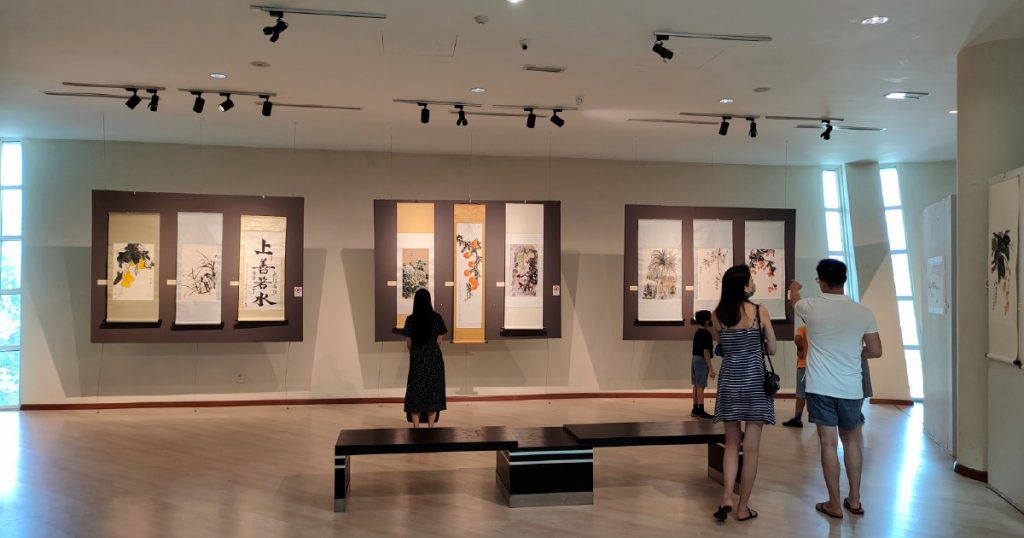
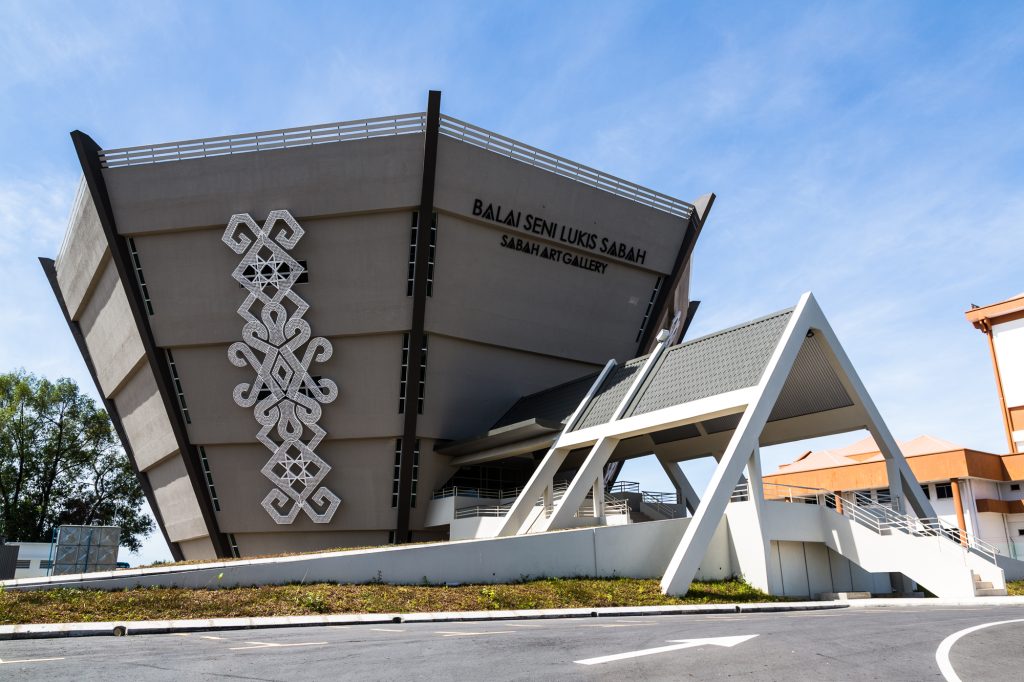
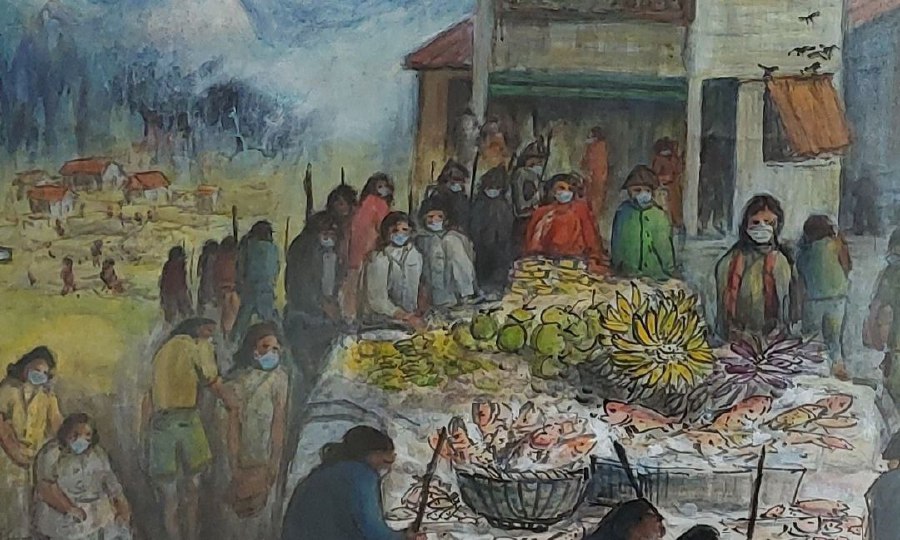
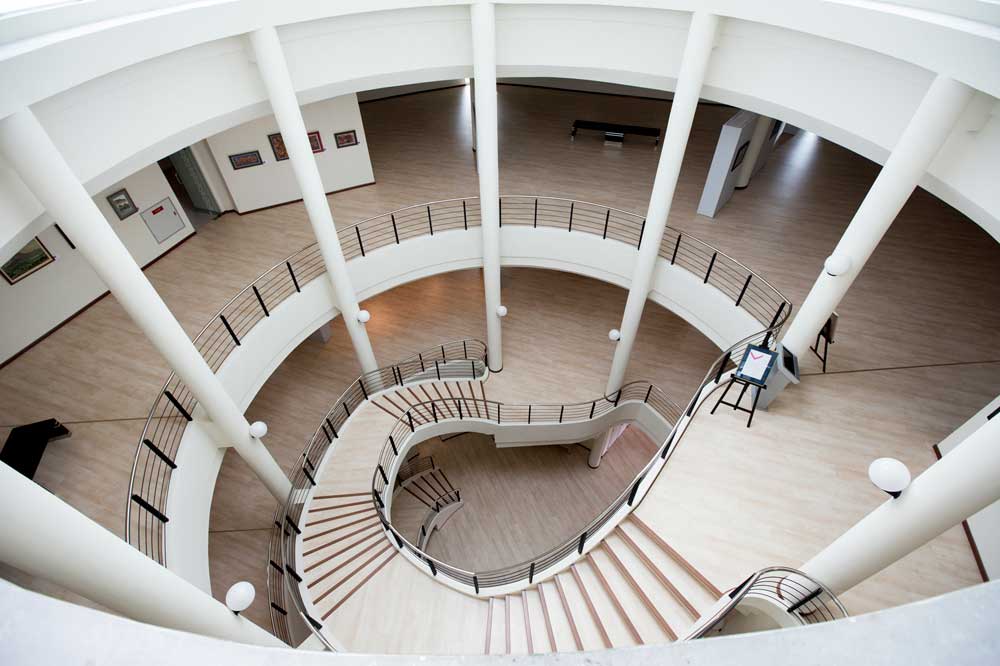
The Sabah Art Gallery has been around since 1984 and today houses thousands of works, including paintings, carvings and sculptures.
But don’t walk through looking only for something pretty.
Look for Sabah.
Mount Kinabalu will inevitably appear.
So will villages, people, indigenous traditions, landscapes and wildlife.
Then look at how differently each artist sees them.
That’s when a gallery becomes interesting.
Then Leave the Gallery
This is where our imaginary Sabah art trail gets better.
Go looking for creativity where it is actually being made.
Sabah has generations of makers whose work sits somewhere between art, craft, culture and everyday life.
Linangkit, for example, is an intricate form of needlework traditionally used to join and decorate sections of clothing. Different communities—including Lotud, Rungus, Bajau and Iranun—have developed their own versions and names for the technique.
Look closely at one. It is extraordinary.
The colours. The geometry. The patience.
Someone had to imagine that pattern before anyone could make it.
If it were hanging in a contemporary gallery somewhere overseas, we’d probably stand in front of it discussing the artist.
Here, we sometimes call it kraftangan and walk past.
Maybe we shouldn’t.
Look at What Young Sabahans Are Creating
Then there’s another Sabah altogether.
The one being drawn, photographed, painted and redesigned by a younger generation.
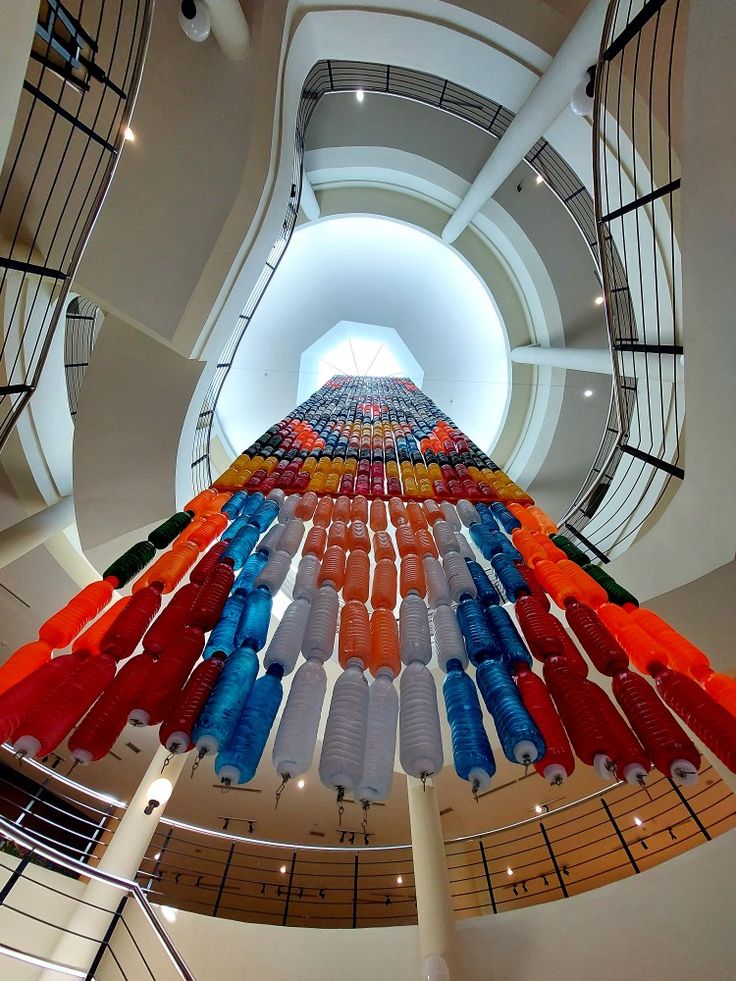
Murals have appeared around Kota Kinabalu and other towns. Illustrators are taking familiar Bornean imagery and giving it contemporary personalities. Designers are playing with local phrases, food, wildlife and cultural references.
Projects such as Pillars of Sabah demonstrated what can happen when Sabahan artists are given public space: dozens of artists interpreting identity, community and issues through their own visual language.
That might be where Sabah’s emerging art story becomes particularly exciting.
It isn’t necessarily about preserving the past exactly as it was.
It’s about asking: What does being Sabahan look like now?
Meet the Maker, Not Just the Product
Here’s something we’d love travellers to try.
The next time you see a beautiful handmade basket, piece of beadwork, textile or carving, don’t immediately ask: “How much?”
Ask: “Who made this?”
Then, if you get the chance, meet them.
Ask how long it takes. Ask who taught them. Ask what the pattern means. Ask whether their children are learning it too.
Suddenly the souvenir isn’t just something you’re taking home.
It has a person attached to it.
And a story.
Maybe Sabah Doesn’t Need an Art District
Perhaps that’s what makes discovering art here different.
You aren’t necessarily going to walk down one beautifully curated street containing twelve galleries, three design stores and an artisan coffee shop.
You’ll have to look harder.
One day the trail might take you into a gallery in Kota Kinabalu.
Another day to a mural.
Another to a village somewhere in Tuaran, Kota Belud or Kudat.
And occasionally, the most interesting artist you meet won’t introduce herself as an artist at all.
She’ll simply tell you:
“My grandmother taught me how to make this.”
And that might be the most inspiring thing you see in Sabah.
BAH DISCOVER. Look closer. There is always another Sabah hiding in plain sight.