
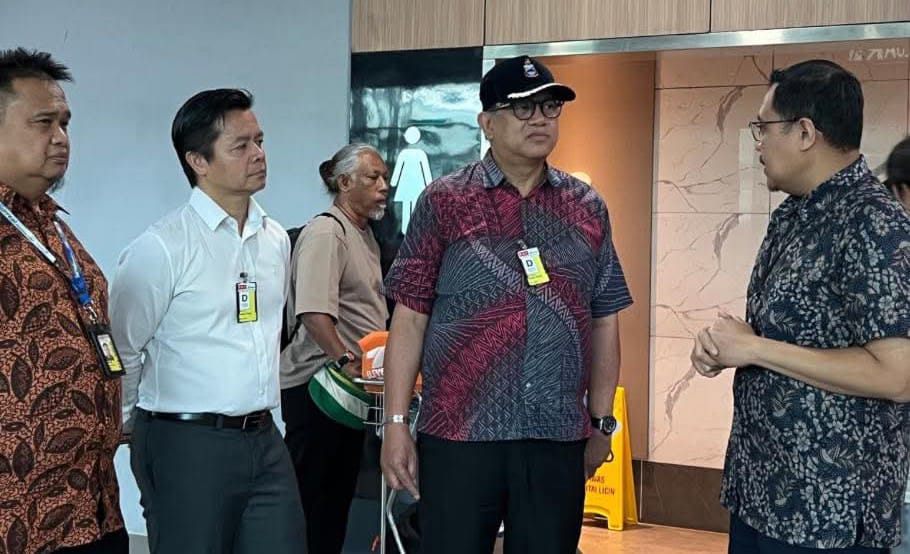
When news broke in the Daily Express that RM11.8 million has been proposed to refurbish 26 toilets at Kota Kinabalu International Airport (KKIA), many Sabahans reacted with disbelief.
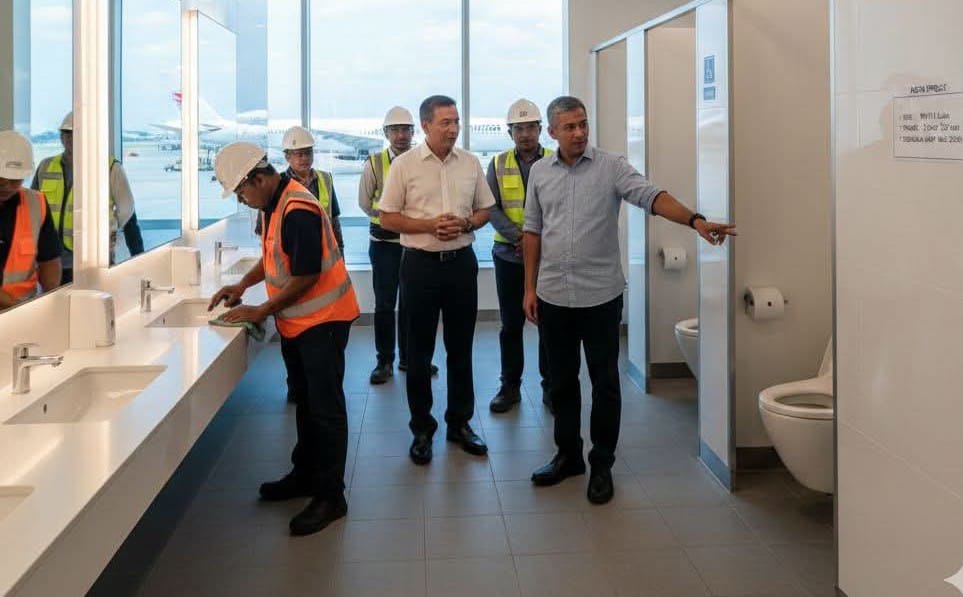
Let’s break this down.
RM11.8 million divided by 26 toilets comes up to approximately RM453,846 per toilet??
That is nearly half a million ringgit for each toilet.
At a time when Sabah continues to struggle with rural water access, road maintenance, school infrastructure gaps, hospital congestion, and airport service complaints, this allocation raises serious questions about priorities, transparency, and value for money.
Is KKIA in Need of Improvement? Yes.
Let’s be clear.
KKIA is Sabah’s main gateway. It represents our state to international visitors, investors, and returning Sabahans. Clean, functioning toilets are not a luxury — they are basic infrastructure.
Anyone who has used certain airport toilets during peak hours knows upgrades are needed. Broken fittings, poor ventilation, inconsistent cleanliness, outdated design — these are legitimate concerns.
But the issue here is not whether refurbishment is needed.
The issue is whether RM453,000 per toilet is reasonable.
What Does RM453,000 Per Toilet Actually Cover?
Even with high-grade commercial specifications — anti-slip tiles, disabled-friendly compliance, plumbing replacement, ventilation upgrades, touchless systems, partition replacements, and professional project management — the cost appears disproportionately high.
For comparison:
- A full commercial restroom renovation in Malaysia typically ranges between RM80,000 to RM200,000, depending on size and scope.
- Even high-end hospitality standard toilets rarely exceed RM250,000–RM300,000 per unit unless there is major structural rebuilding involved.
So what justifies nearly RM500,000 per toilet?
Is it:
- Structural redesign?
- Expansion works?
- New sewage systems?
- Luxury fittings?
- Consultancy layers?
- Or simply inflated costing?
Sabahans deserve itemized clarity.
Opportunity Cost: What RM11.8 Million Could Also Do
To put this in perspective:
RM11.8 million could potentially:
- Upgrade multiple rural clinics.
- Repair critical pothole stretches across several districts.
- Fund water filtration systems for interior kampungs.
- Install solar lighting in underserved communities.
- Support rural digital access initiatives.
- Upgrade airport WiFi infrastructure.
- Improve baggage handling efficiency.
Instead, the headline reads: 26 toilets.
This is not about dismissing sanitation.
This is about proportionality.
Our Concern at Borneo Uncovered
As Sabahans who care deeply about governance and fiscal responsibility, we are concerned about:
- Transparency – Is there a publicly available breakdown of costs?
- Procurement process – Was this tendered competitively?
- Scope clarity – Are we refurbishing or reconstructing?
- Value engineering – Were cost-optimized alternatives evaluated?
- Long-term maintenance planning – Will the new toilets justify the spend through durability and lower upkeep?
When numbers appear disconnected from reality, public trust erodes.
What Could Work Realistically?
If refurbishment is required, a more realistic and accountable approach could include:
- Conducting an independent cost audit before approval.
- Phased refurbishment to reduce peak disruption.
- Standardized commercial-grade fittings (durable, not luxury).
- Transparent cost disclosure per toilet block.
- Public reporting on project milestones.
- Clear justification if structural rebuilding is required.
A budget range of RM4–6 million would already allow for significant, high-quality upgrades if managed efficiently — assuming this is refurbishment and not full structural redevelopment.
If the cost truly must be RM11.8 million, then Sabahans deserve a clear technical explanation backed by engineering documentation.
Governance Is Not About Spending Big
It is about spending wisely.
Sabah has long struggled with perceptions of leakages, inefficiencies, and disproportionate project costing. Whether fair or not, this perception persists because numbers like this surface without detailed explanation.
When public funds are involved, scrutiny is not opposition — it is responsibility.
Borneo Uncovered’s Stand
We believe:
- KKIA deserves clean, modern facilities.
- Sabahans deserve fiscal transparency.
- Public funds must reflect necessity, not excess.
- Every ringgit spent must be defensible.
Half a million ringgit per toilet is not a small matter.
It demands explanation.
And until a detailed breakdown is made public, questions will continue — not because Sabahans are unreasonable, but because Sabahans are paying attention.
