
Across Sabah today, a date is quietly looming in conversations, coffee shops, village halls, and social media timelines.
15 April 2026.
For many Sabahans, it is not merely a legal deadline. It is a test of trust — a moment that will determine whether long-promised constitutional rights are finally honoured, or once again postponed.
To understand why emotions run high, one must understand what the 40% revenue entitlement actually represents.
A Promise Written Into the Federation
When Sabah joined Malaysia in 1963 under the Malaysia Agreement, special financial arrangements were put in place to ensure that the state could develop fairly within the federation.
Among these arrangements was a constitutional provision guaranteeing Sabah 40% of the net revenue collected by the federal government from the state. This entitlement is embedded in Article 112C and the Tenth Schedule of the Federal Constitution.
The intention was clear: Sabah’s resources and economic contributions should generate meaningful development for its people.
However, over time the formula was never properly reviewed or implemented as intended. For decades, Sabah received a much smaller annual grant instead of the full 40% share.
The consequences have been significant.
Despite being rich in oil, gas, timber, and biodiversity, Sabah remains one of Malaysia’s poorest states. The High Court later noted that the state’s entitlement had effectively been ignored for 48 years between 1974 and 2021, often referred to as Sabah’s “lost years.”
Those years represented not just accounting discrepancies — but lost opportunities for development.
- Schools that could have been built.
- Roads that could have connected rural districts.
- Healthcare and infrastructure that could have improved everyday life.
And MORE.
The Landmark Court Decision
In October 2025, a major legal turning point occurred.
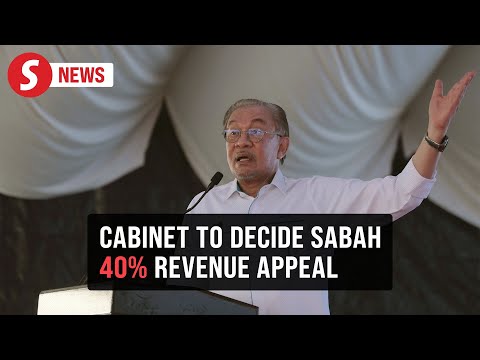
The Kota Kinabalu High Court ruled in favour of the Sabah Law Society, affirming that Sabah’s constitutional right to the 40% revenue share had not been properly fulfilled.
The court ordered both the federal and Sabah governments to conduct a review of the entitlement and reach an agreement within a fixed timeframe.
The ruling required:
- A review to begin within 90 days
- A final agreement within 180 days
That 180-day deadline is 15 April 2026.
For many Sabahans, the decision represented something rare: legal recognition of a grievance that has existed for generations.
It was seen not just as a financial ruling — but as validation of Sabah’s place and rights within the Malaysian federation.
A New Wave of Concern
However, recent developments have complicated the situation.
Although the federal government initially indicated acceptance of the High Court decision, legal actions were later filed to challenge aspects of the ruling and seek a stay on its enforcement.
For many Sabahans, this created confusion.
How can a ruling be accepted while legal steps are simultaneously taken that may delay its implementation?
Such moves have sparked concern among politicians, civil society groups, and ordinary citizens that the process could stretch into prolonged litigation — potentially delaying the outcome beyond the April deadline.
Sabah lawmakers across political parties have already warned that if negotiations fail to produce results by April 15, they are prepared to support further legal action to enforce the state’s constitutional rights.
This rare unity reflects the seriousness of the issue.
Why Trust Is at Stake
The 40% question is ultimately about more than numbers.
It is about trust.
For many Sabahans, the matter touches on a deeper historical narrative: the feeling that promises made during the formation of Malaysia have not always been fully honoured.
Every delay or procedural maneuver risks reinforcing that perception.
Conversely, resolving the issue transparently and fairly could rebuild confidence in federal–state relations and demonstrate that the federation works as intended.
The Stakes for Sabah’s Future
If the 40% entitlement is implemented meaningfully, the impact could be transformative.
Additional revenue could help Sabah invest in:
- Rural infrastructure
- Education and healthcare
- Connectivity for remote communities
- Environmental protection and sustainable development
For a state blessed with extraordinary natural wealth yet still facing development gaps, the potential benefits are enormous.
But beyond economics lies something equally important: dignity.
Honouring Sabah’s constitutional rights would signal that the federation respects its founding agreements and values the partnership between Peninsular Malaysia and the Borneo states.
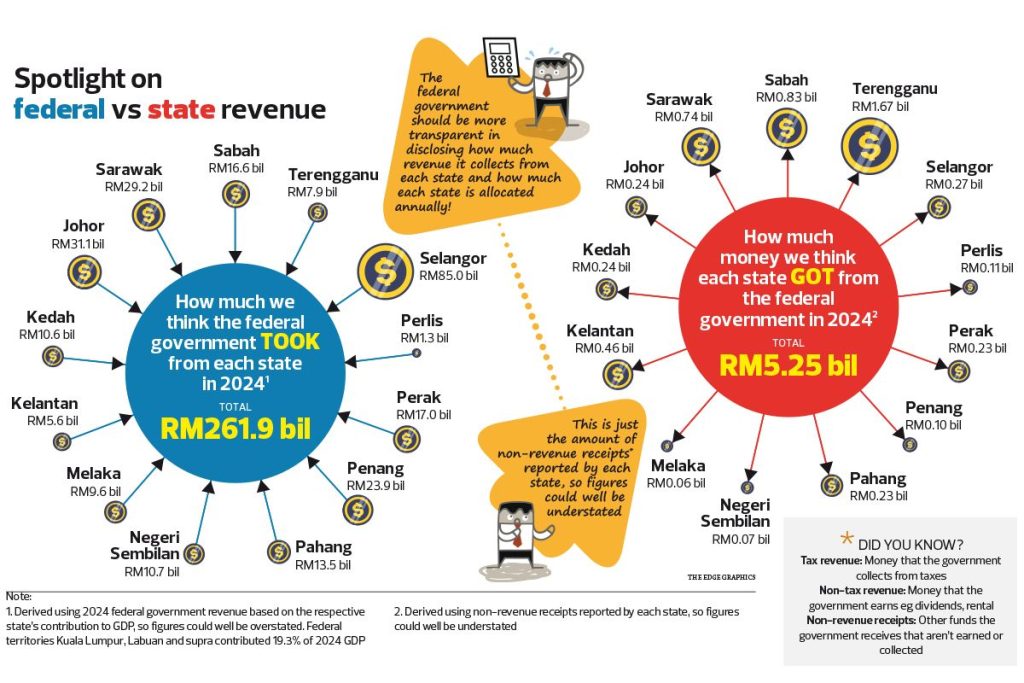
An article covered by The Edge, Cover Story: States vs Federal Government on 27 November 2025 is a good read.
The Countdown Continues
As April 15 approaches, Sabahans are watching closely.
Not with hostility — but with hope.
Hope that this moment will mark a turning point rather than another chapter in a long history of unresolved grievances.
Because at the heart of the 40% issue is a simple principle:
A promise made at the birth of a nation should not take generations to keep.
And with the deadline approaching, the people of Sabah are counting the days.
